
The Union Budget 2026-27, presented by Finance Minister Nirmala Sitharaman, is a blueprint for India’s next phase of growth. With a vision for ‘Viksit Bharat’, this budget balances ambition with inclusion, focusing on youth empowerment, economic reforms, and fiscal discipline.
For us as finance professionals, the budget represents a transition away from the legacy of the Income Tax Act, 1961, toward a framework designed for a modern, digital-first economy. A move from managing old complexities, to a re-learning a new era of technology driven tools and services.
Why it Matters?
This year’s budget is not just about numbers, it’s about people. The government’s 3 ‘kartavya’ approach:
- Enhancing productivity: Accelate and sustain economic growth by enhancing productivit
- Fulfill aspirations of people, maing them strong partners in India’s prosperity.
- Sabka Saath, Sabka Vikas, Ensure access to resources for all
A budget packed with reforms, investments, and opportunities for students, CAs, MSMEs, and the general public.
- A New Income Tax Act After 64 Years
The biggest reform in this Budget is the Income Tax Act, 2025
What’s New: A complete overhaul of the Income Tax Act, effective April 2026, with simplified rules and forms. The aim is to make tax compliance easier for everyone, especially ordinary citizens.
Why it Matters: For students entering the workforce, filing taxes will be less intimidating. For CAs, the new act means less time spent on complex provisions and more time advising clients on value-added matters. It’s a step toward a more transparent, digital-first tax system.
2. Return Filing & Compliance: Flexibility with Accountability
To facilitate the transition to the new Income Tax Act 2025 and manage compliance load, the budget proposes a staggered timeline for filing tax returns.

- Revised ITR Timelines: ITR-1 & ITR-2: 31 July; Non-Audit Business and Trusts: 31 August
- Key Changes
- Revised return allowed up to 31 March
- Updated return permitted even after reassessment, subject to additional 10% tax
- Why it Matters: The system rewards voluntary correction and flexibility. It further sheds focus on intent with no longer rigid compliance timelines.
3. Cost of Trading goes up
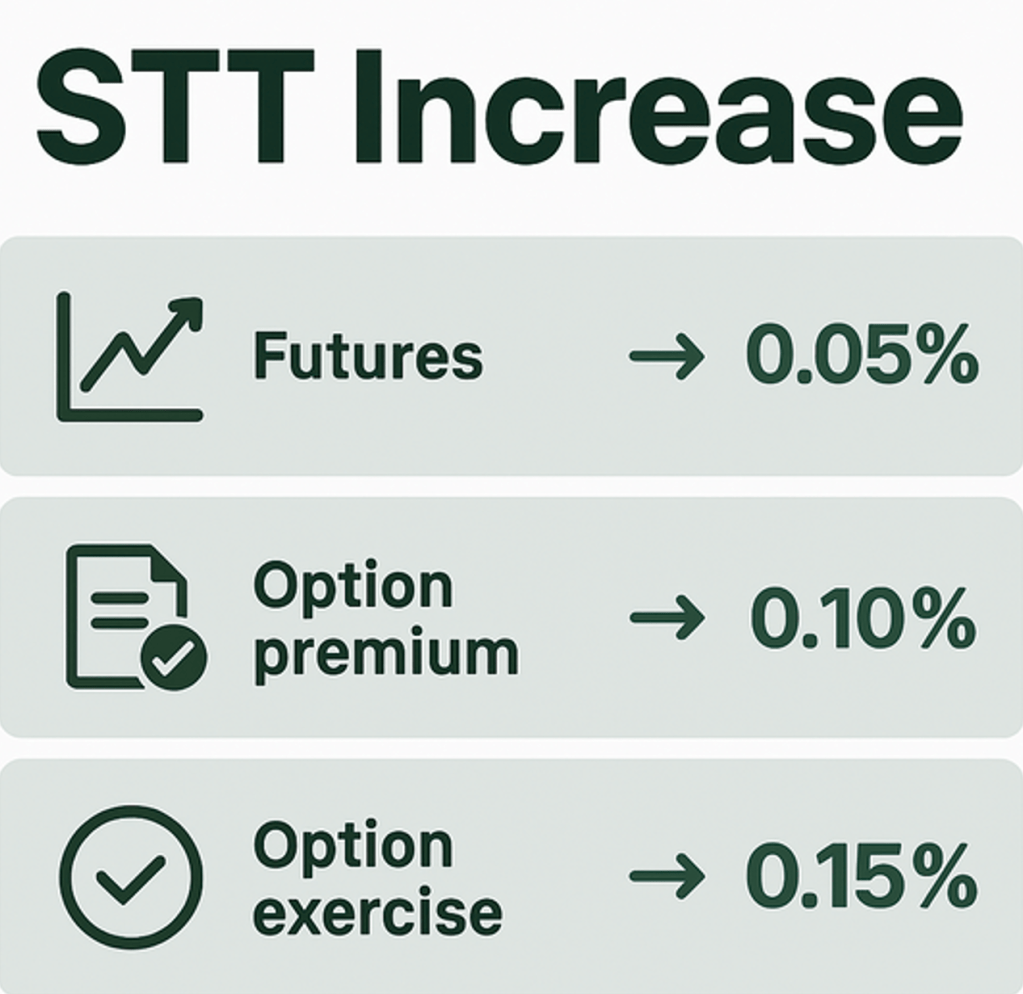
Why it Matters: The rise in STT, increases transaction costs for frequent traders, and could be seen as a policy intent to curb speculative trading. For students, it reinforces how indirect taxes influence market behaviour.
4. MAT Regime
The Minimum Alternate Tax (MAT) framework is undergoing huge transformation. From April 1, 2026, MAT will transition into a final tax, meaning there will be no further MAT credit accumulation. The MAT rate is being reduced to 14% from the current 15%.
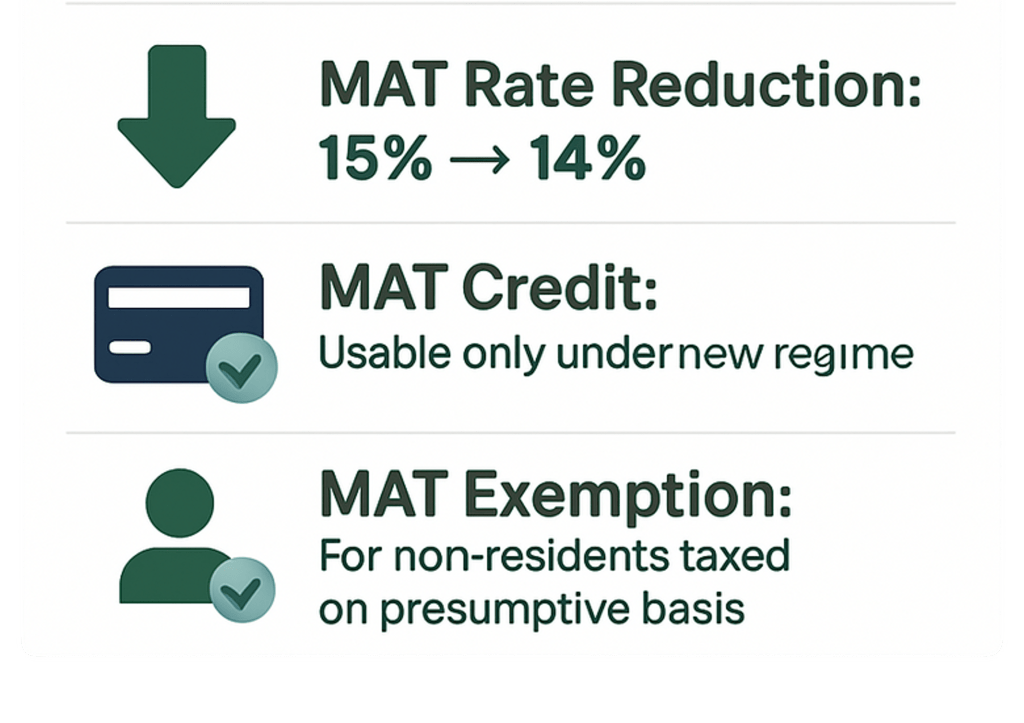
Why it Matters: This highlight’s the government’s long-term push towards the new tax regime while ensuring foreign investors are not overburdened.
5. Buyback of Shares
The taxation of share buybacks has undergone a fundamental change to address the perceived misuse of the route by promoters. Consideration received by a shareholder on a buyback will now be taxed as Capital Gains for all shareholders. This ends the tax-neutrality of buybacks compared to dividends for many investors.

Why it Matters: This shift aligns buyback taxation with economic reality while removing arbitrage between dividends and buybacks.
6. Foreign Asset Disclosure
A critical ‘clean-up’ opportunity is provided through a one-time, 6-month foreign asset disclosure scheme. This targets small taxpayers, including students and relocated NRIs, who may have failed to disclose overseas holdings. The scheme is categorized as follows:
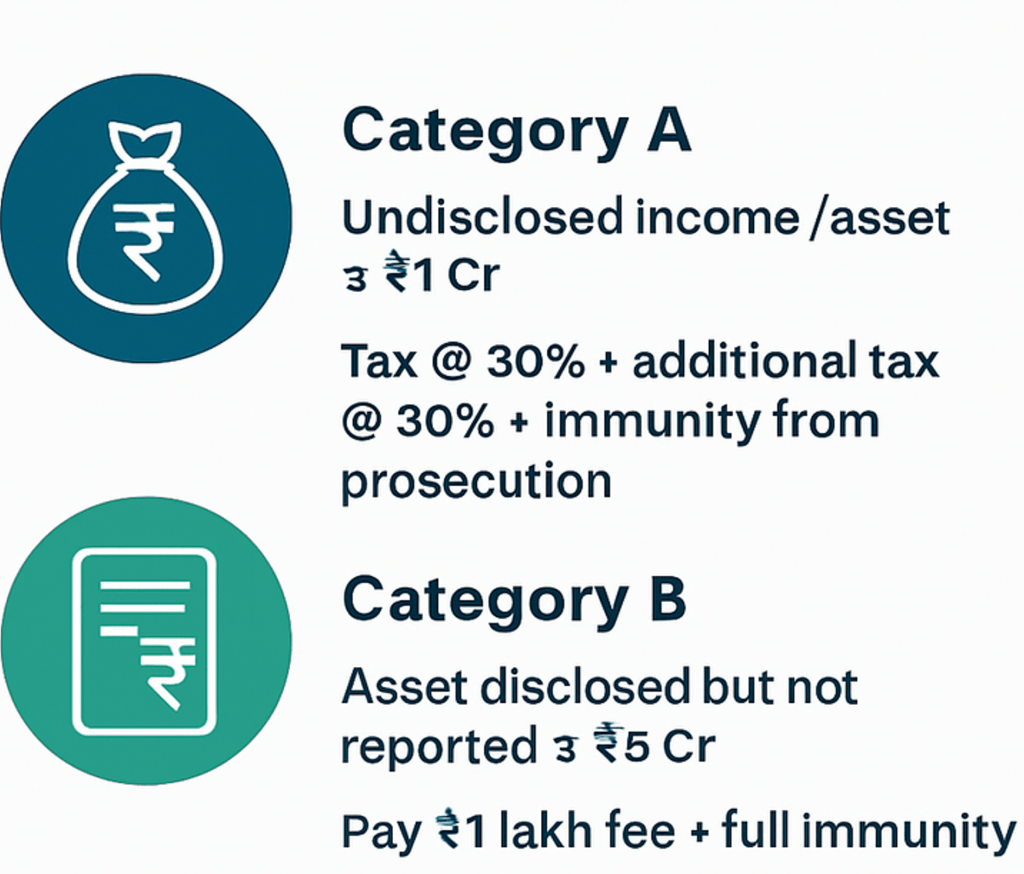
Why it Matters: The move acknowledges global mobility, first-time earners, and genuine reporting errors. It further encourages compliance without criminalization.
7. Reliefs & Exemptions
Key reliefs announced include a total tax exemption on interest awarded by the Motor Accident Claims Tribunal (MACT) to individual and the reduction of TCS rates to 2% for overseas tour packages and LRS education/medical remittances. Further, basic customs duty is waived on 17 cancer drugs and medicines for seven rare diseases to provide relief to patients
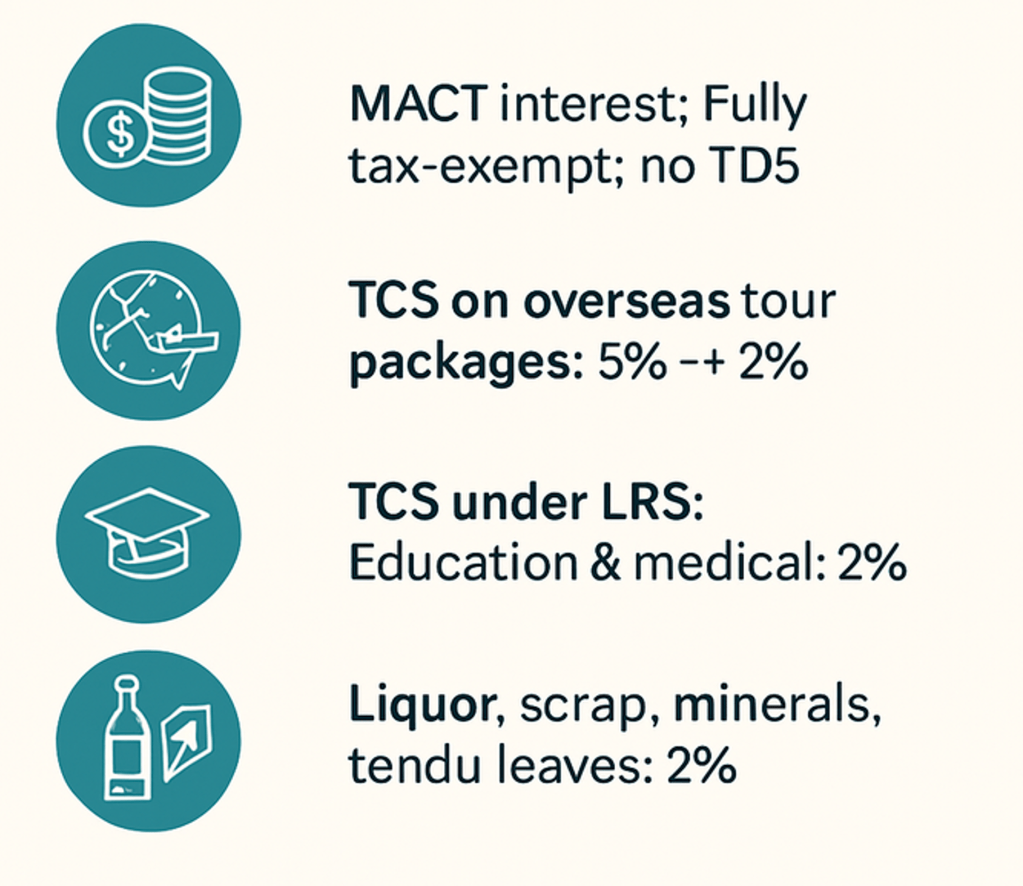
Why it Matters: The reliefs and exemptions improve cash flow and reduces procedural burden for individuals.
8. TDS & Procedural Simplification
TDS compliance is simplified by classifying manpower services as contractor payments, removing TAN requirements for NRI property purchases, and allowing companies access to a consolidated Form 15G/15H.
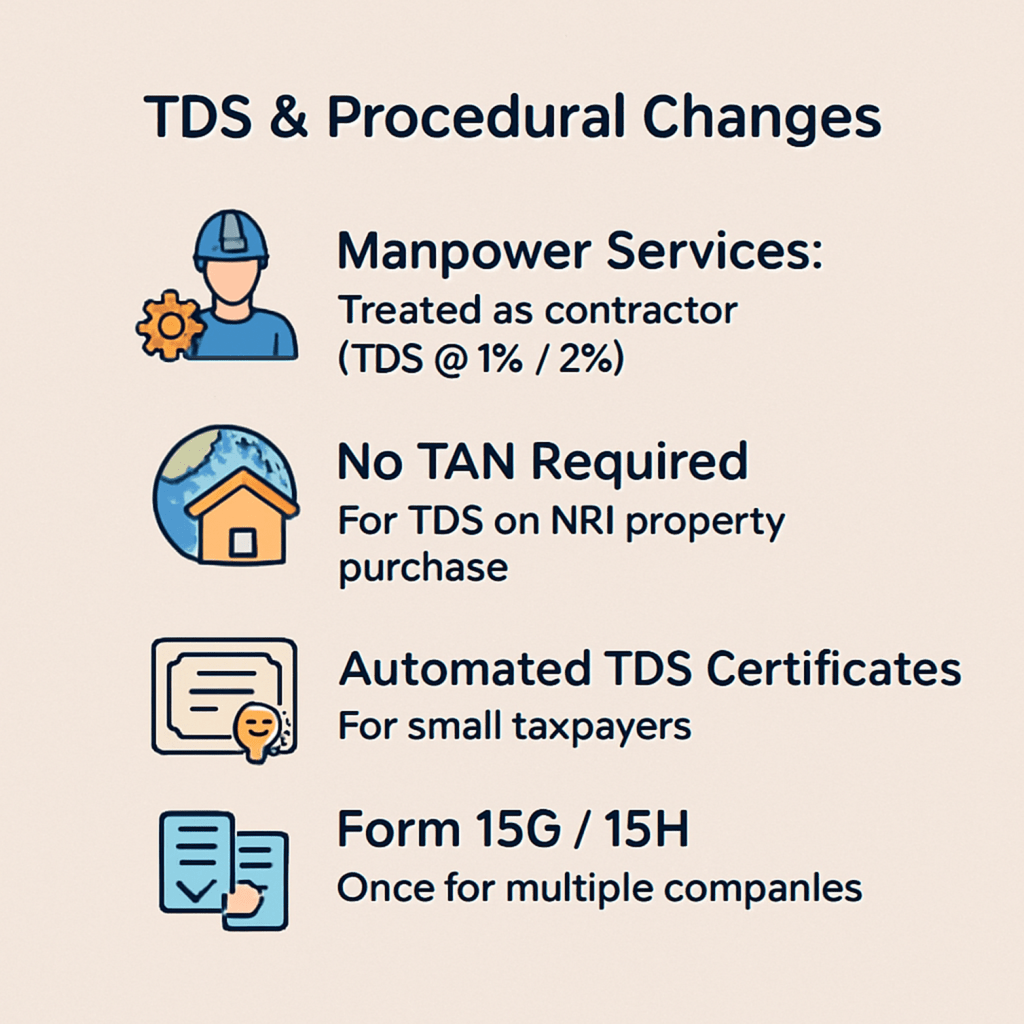
Why it Matters: A significant move towards system-driven compliance, reducing reliance on manual paperwork.
9. Litigation & Penalty Reforms
To streamline administration, assessment and penalty proceedings will now be integrated into a single common order. Further, the pre-deposit required for filing an appeal is reduced from 20% to 10%. Additionally, the existing immunity framework for penalty and prosecution in cases of underreporting is also being extended to misreporting.
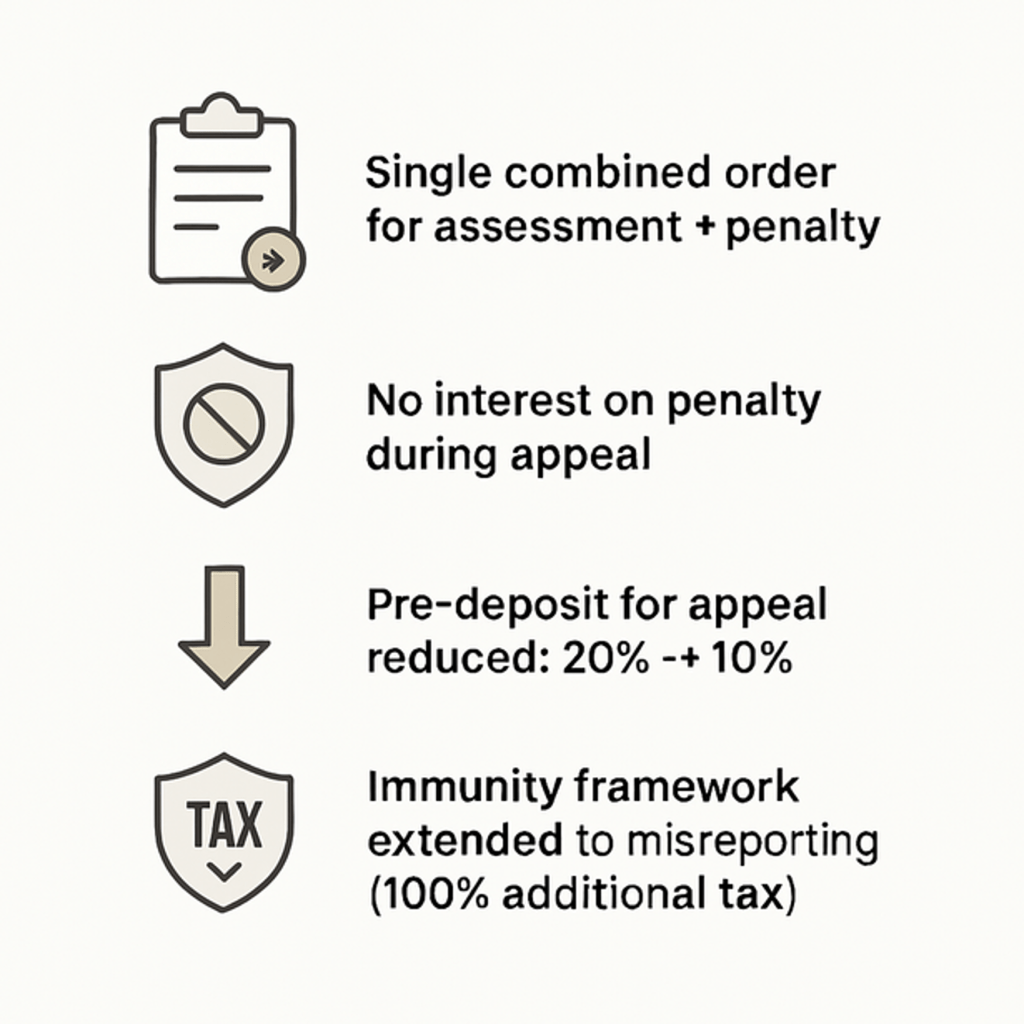
Why it Matters: These reforms lead to lower litigation pressure, faster resolution, and improved trust.
10. The Rise of the ‘Corporate Mitra’: A New Professional Frontier
In a move to rise the MSME sector, the budget proposes the creation of a new cadre of para-professionals known as ‘Corporate Mitras‘. This initiative aims to help smaller enterprises in Tier-II and Tier-III towns meet their compliance requirements at affordable costs. For CA students and young professionals, this represents a massive opportunity to expand their practice footprint into growing industrial clusters. The government will facilitate the following professional institutions to design short-term, modular courses and practical tools for these accredited professionals:
• The Institute of Chartered Accountants of India (ICAI)
• The Institute of Company Secretaries of India (ICSI)
• The Institute of Cost and Management Accountants of India (ICMAI)
10. Income Tax Slabs
No changes in the tax slabs for 2026-27
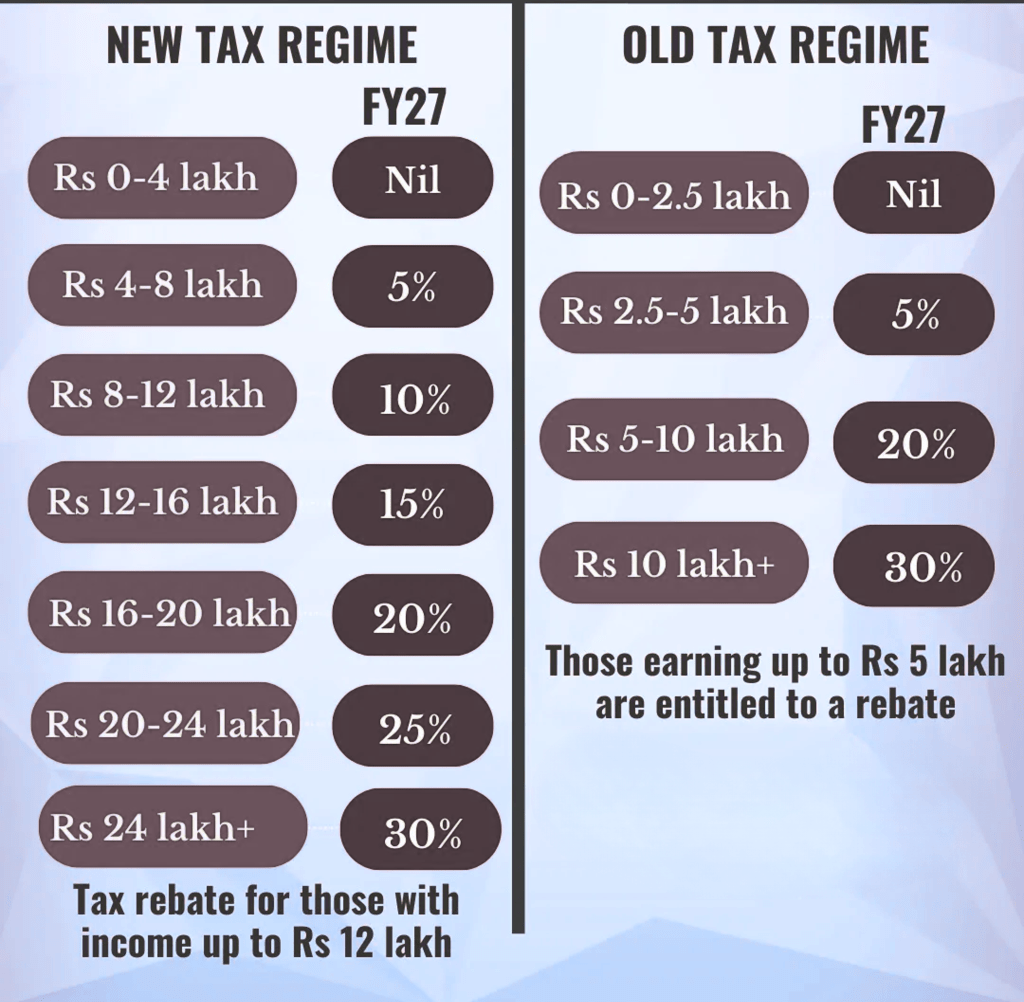
11. Sector-Specific Incentives
The budget displayed a major win for the technology sector, with the clubbing of software development, IT-enabled services, KPO, and contract R&D under a single category of ‘Information Technology Services’
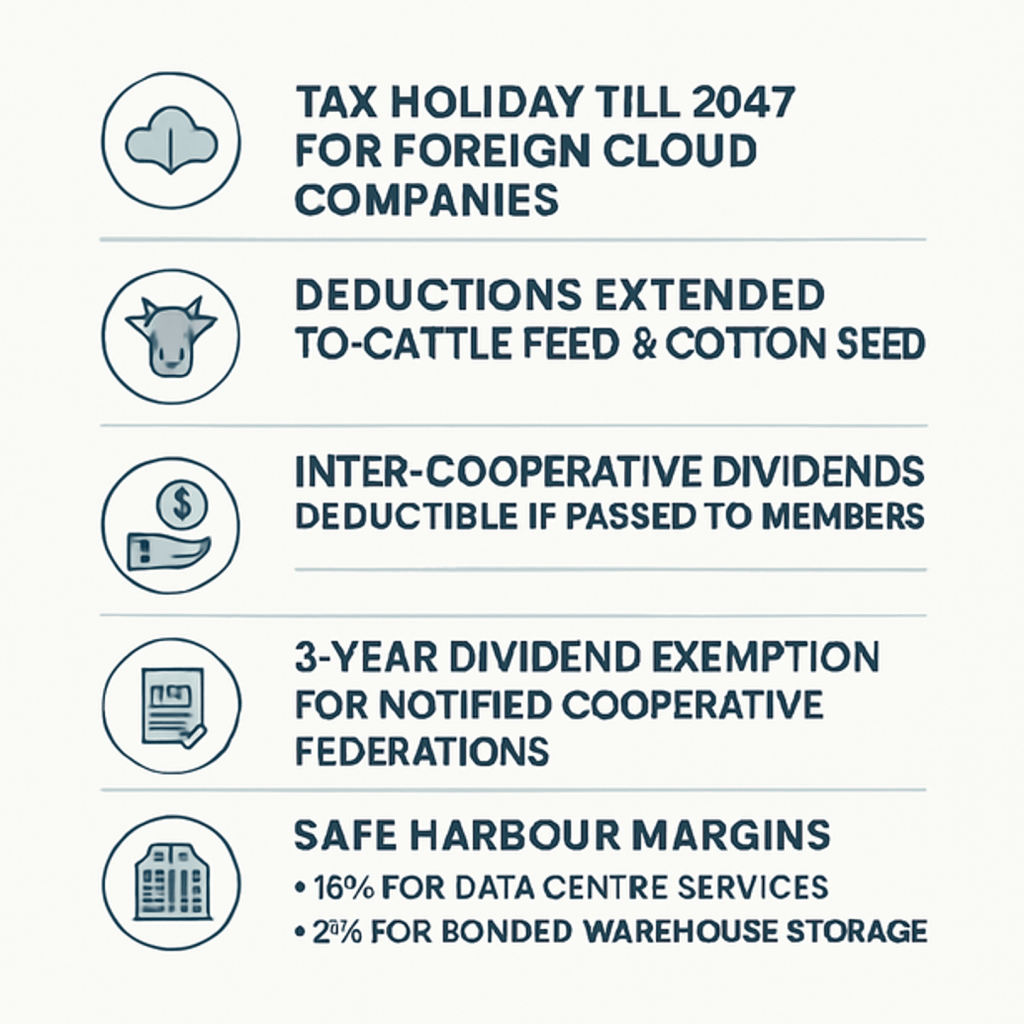
Why it Matters: India is positioning itself as a global services & infrastructure hub.
Final Takeaway
Budget 2026-27 is anchored in the theme of 3 Kartavyas. It signifies “Yuva Shakti-driven” economy where professional integrity, simplified compliance and technology adoption are pillars of growth .
For us, the role now is to become a strategic partner in India’s journey toward Viksit Bharat 2047, leveraging new tools and simplified acts to drive economic transparency and growth.
If you have any questions/queries regarding the budget or need any tax related assistance, feel free to reach out to us at taxavk@gmail.com or submit your request here.

